Government & organization partnerships

Help policy information truly arrive,
and requests for help find the right door.
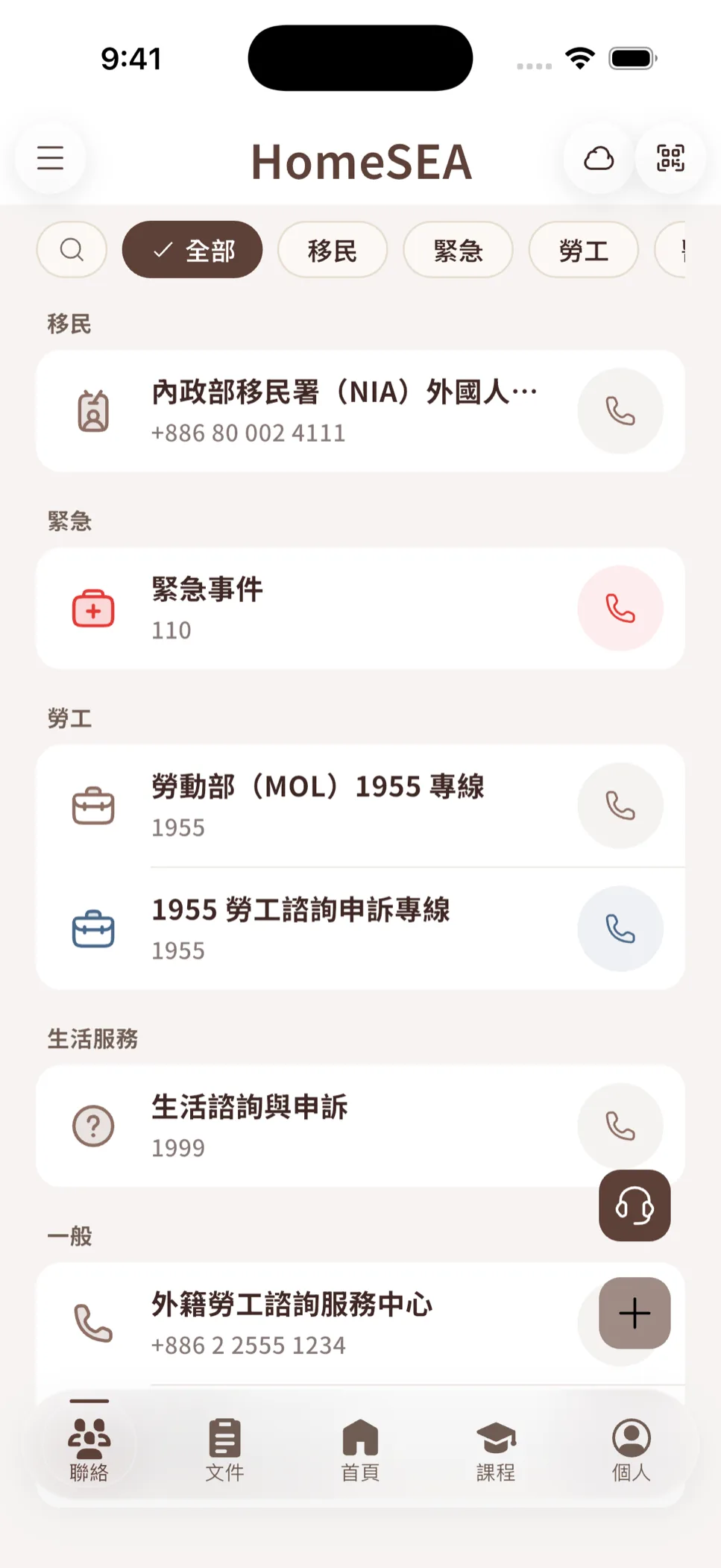
Government and civil society organizations already provide many services for migrant workers, but the information can be scattered across different websites, agencies, and language versions. Through multilingual digital tools, HomeSEA wants to make policy information easier to understand and route requests for help more appropriately.

HomeSEA

Multilingual service connection

Government & local services
Civil society & frontline organizations
Speakers of different languages
Figure 1 · HomeSEA connects government, civil society organizations, and speakers of different languages
Ministry of Education U-startPhase 1 grant recipient, Innovation and Entrepreneurship Program
Startup Star FinalistTop six in the Economic Daily News 10th Startup Competition
Six languagesChinese, Vietnamese, Indonesian, Filipino, Thai, and English
Privacy firstDesigned around the minimum of personal data

Before information arrives, there's a gap in understanding

Frontline staff often have to answer the same questions again and again, or handle cases referred to the wrong office. For users, different websites, language versions, and eligibility rules add to the burden of understanding and choosing.

What we offer

Start with one region, one service site, or one specific issue.

Each partnership is planned together, based on policy goals, frontline workflows, supported languages, and data governance needs.

  1. A

    Multilingual policy and rights information integration

    Organizes scattered service content into a multilingual entry point that's easier to understand and search.

  2. B

    Digital entry points for local service sites

    Plans dedicated versions and service paths based on the needs of local governments, industrial parks, or frontline sites.

  3. C

    Rights education and outreach projects

    Co-designs content that's understandable and usable for specific nationalities, regions, or issues.

  4. D

    Initial categorization and triage of help requests

    Helps users add context to their problem, reducing wrong referrals and repeated confirmation on the front line.

  5. E

    Multilingual content for specific issues

    Produces multilingual digital content that fits real situations, based on policy or service needs.

  6. F

    Anonymized needs and trend analysis

    Once data governance and partnership scope are confirmed, evaluates anonymized or de-identified ways to understand trends in needs.

Partnership value

Less repeated explaining on the front line, more services reaching the right people.

We measure success by whether users understand, whether referrals are correct, and whether the front line's burden is lighter, not just by how many times information was published.

  • Reduce the burden of repeated explanations on the front line
  • Improve the reach and understanding of multilingual policy information
  • Reduce wrong referrals and delays in getting help
  • Understand the needs of different nationalities and regions earlier
  • Build a preventive service model instead of reacting after the fact

Local and field pilots

Turning national service information into entry points that fit local and frontline realities.

Start from a single need at a local government, industrial park, service site, or nonprofit. Confirm the users, languages, service scope, and referral responsibilities, then gather feedback through small-scale testing.

Government & organization partnerships

If your organization is planning migrant worker services, rights outreach, help-request triage, or a local pilot, we can start with a discovery interview.